Friday, October 8, 2021

Flower Beds

As we finished up the planting beds that we laid out in the pasture to the west of our house, I began counting on my fingers. These beds were huge, in my experience, but our list was huge-er. Where would we put the flowers?

An easy glance over our shoulders offered the obvious solution. Our shop was situated on the opposite side of a gully from our house. Between the shop and the gully was a gentle, south-facing slope that was obviously perfect for flower beds. They would get so much sun. We would see them from our windows. They were right next to the shop, which housed our tools. There were two water-hydrants already in place. It was obvious.

The obvious choice.

I was at a loss as to how to orient the flower beds. How wide? Which direction? How many? I brainstormed with friends and husband, staring at the slope from our deck, imagining. It wasn't obvious.

Then, one sunny winter day, I walked along the slope, along the edge of the shop, along the driveway. I got out some stakes, twine, and a hand sledge and started marking off a pathway along the shop, wide enough for frequent foot and cart traffic. I marked off the slant of the gorge, the stretch of driveway, the most direct route between house and shop. It all became obvious.

We could fit nine beds on that slope, 45 feet long, which echoed the length of our first set of beds, and 3 feet wide, for ease of flower harvesting. The paths could be narrow, since these flowers wouldn't sprawl. We'd trim back the maple tree that did sprawl across the center of our slope. It all took obvious shape.

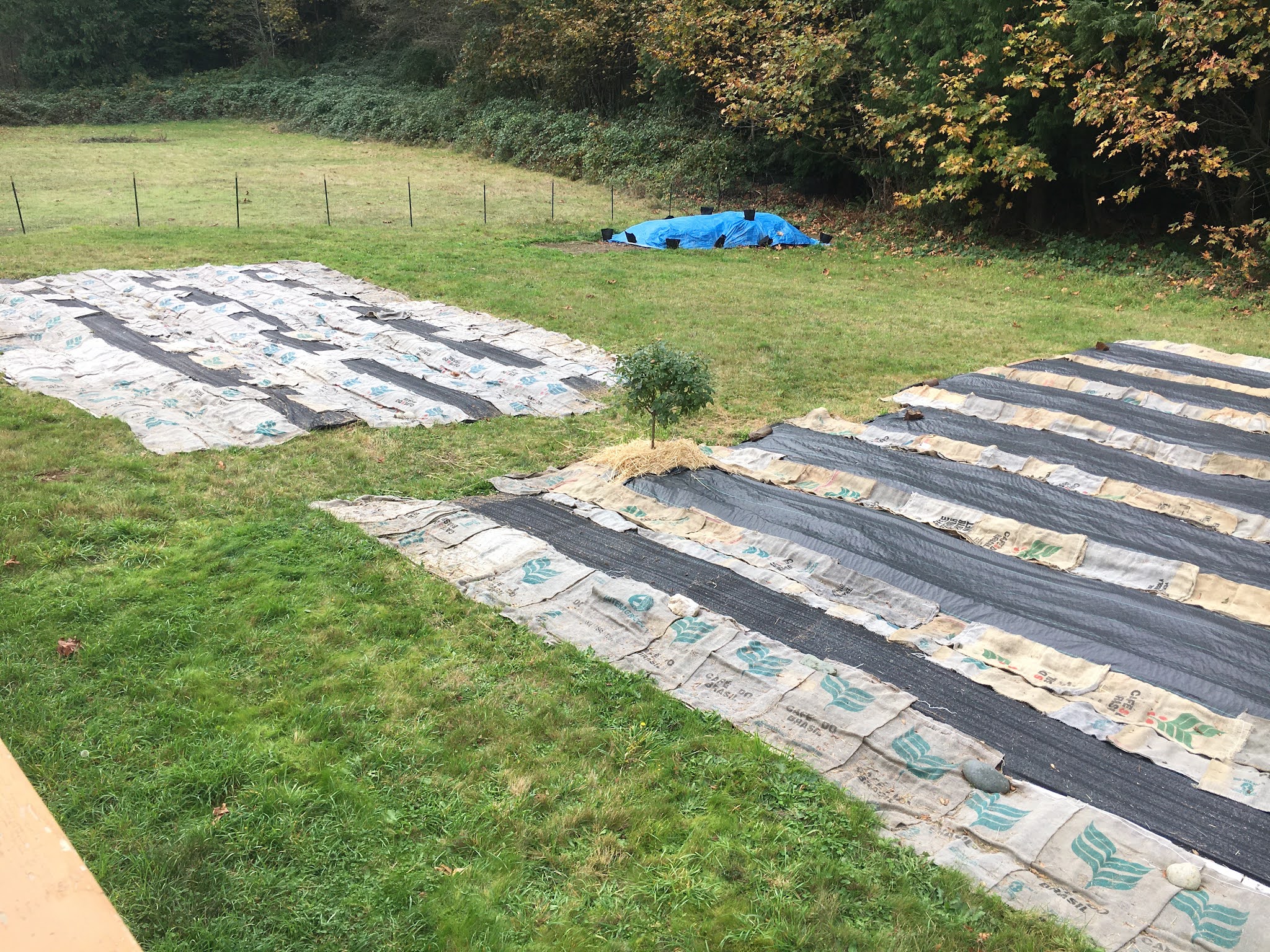
We ordered more straw and dairy compost and mowed the pasture grasses and weeds that had crammed themselves onto that gentle slope. We dealt out the compacted straw pads, spread 5-6" inches of dairy compost, covered with fabric cloth, bird netting, and zigzagged twine, and stepped back to take a look.
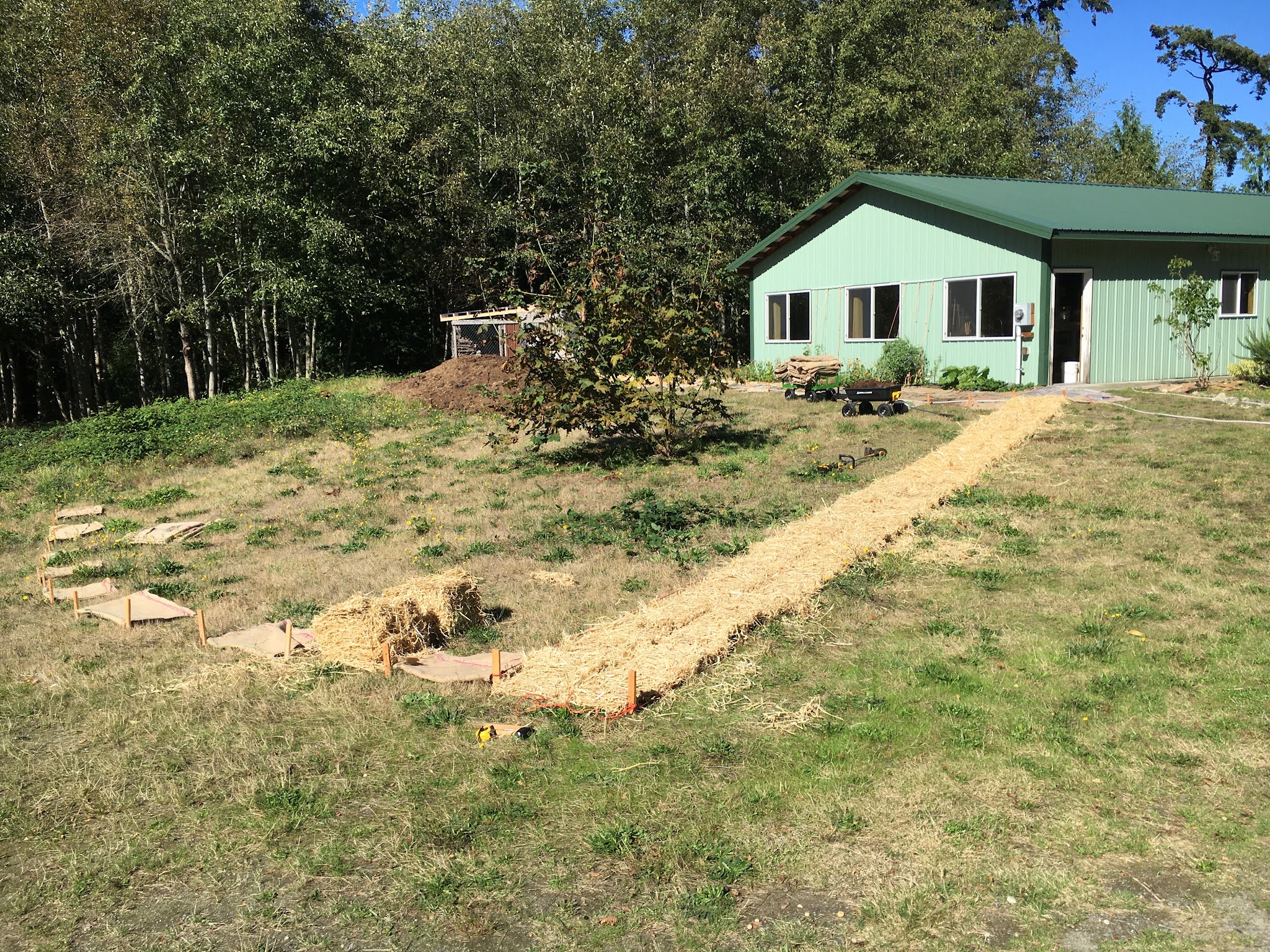
A direct path between house and shop.

Laying down straw, topping with compost.

The diagonal layout dictated by the gorge left a large, empty triangle next to the driveway. We could put perennials there.

We spread cardboard, burlap bags, and wood chips, and left the flower beds to work on their winter steeping.

Fabric, netting, and burlap in place for the winter.

Wood-chip paths and tilthed beds in the spring.
The triangle bed completes the layout.
With 14 veggie beds steeping to the west of the house and 10 flower beds steeping on the shop's slope, we were ready for spring.

Wednesday, October 6, 2021

Chipless on Camano

 Our small farm is on the south end of Camano Island, making it a bit far for some professionals to make the trek. That includes arborists and all ranks of tree-tenders. It's hard for us to get wood chips.

Being a no-till farm, chips are a vital ingredient, providing coverage for walkways throughout our planting beds. Being a no-till farm, we add straw and compost on top of the native soil and build UP. Chips add height to the pathways, stabilizing the edges of the beds. Straw, compost, and chips create amazingly bountiful harvests.

Now, we could buy chips from a nursery or landscape supply business, but it's hard to fork out $400 - $500 for a load of chips knowing that they are available for $0 - $25 a load. Plus, we're on a tight budget, living on a fixed income, so practicality dictates that we spend money when we have to and save money when possible.

A local tree-trimming business did drop off one load, but they admitted that we were just too far away to make it practical for them to drop off more, even with a cash incentive. But we did get one load! That was a huge step forward.

How to make up the difference? We needed a second load.

Dambara, my husband, spent most of the winter months uplimbing the mature trees that encircle our property and taking out the tangle of smaller trees, bushes, and, you might have guessed this, brambles. A Pacific Northwest staple, those brambles. I'm in love with them for about 5 weeks each fall, when they offer up those delectable berries, but their prolific nature pushes them to invade every inch of land possible. So, Dambara has worked and worked, taming them back into a reasonable, manageable form.

. . . to this.
From this. . .
In the process of uplimbing and clearing, Dambara created two, gigantic mountains of brush. Enormous piles, stretching about 50 feet, 5 feet high, and probably 15 feet wide. Enormous. We joined forces with some local friends and rented an equally enormous chipper for a week, and we got to use it for three entire days.

To get this.

Three days was enough time for us to chip our way through those enormous piles, shooting the chips into the back of a friend's pick-up truck, and dumping them into the middle of our garden plot. From there, we wheelbarrowed them onto each pathway and spread them out with a rake. We laid down cardboard first, as a weed block. We covered the cardboard with burlap bags, to stabilize the layers.

To get . . . Chips!!!

That cardboard was a godsend come spring and summer. Our weed burden was minor. Minorly minor. We could pull weeds throughout our entire garden once a week, taking about a half an hour for the entire garden plot. Cardboard is a small-scale farmer's best friend.

Victory.

So, we conquered the chip challenge. Stage Two chip-challenge is approaching, since we'll add another layer of straw and compost to the planting beds, necessitating another 2" - 3" layer of chips in the walkways. We're on the list for chip-drop, so wish us luck. We can conquer the world with just two loads of chips.

Monday, October 4, 2021

Camano Winds

We felt great about our ten planting beds. We were way ahead of the game by building them in the fall and letting them steep until spring. We'd be weed-free, since all the beds were covered with sturdy landscape fabric. Rain could get in, but weed seeds would bounce along to another destination, and any stray seedlings would languish under the black fabric.

So neat. So tidy.

Time for a cup of tea and a comfy chair.

Ha!

Fall winds wound up, the warm-up act for winter winds. Almost every morning a glance out the windows showed us that the tea and comfy chair weren't quite within reach.

We tried everything. We placed large rocks along the edges of the landscape cloth. The wind snuck under the cloths between the rocks and shuddered the cloth from under the rocks. Ten beds at 45 feet each adds up to 900 feet of fabric edge. We moved so many rocks so many times it got the better of us.

We tried thick branches, left over from uplimbing the perimeter trees. Each branch could secure 10-15 feet of fabric edge, enormously reducing the number of rocks we had to move. The fabric escaped, flew in circles, and tangled itself around the limbs.

We added burlap bags under the rocks and limbs. The burlap would stay wet and heavy from the rain and weigh down the entire edge, reinforced by the weight of the rocks and limbs. We hunted down a lot of burlap amongst the trees edging our beds, relaid them, rerocked and relimbed them, and thought fleetingly of tea and comfy chairs.

The fabric would. not. stay. put.

We zigzaged lengths of twine across the beds, relaid the burlap, rerocked and relimbed the burlap. Nope. The cloth still shuddered and jittered as the Camano winds sped merrily overhead. The fabric snuck out from all of its assorted restraints and wrapped itself untidily around nearby bushes and trunks.

The trick that finally worked was bird netting. We straightened all the lengths of fabric . . . again. . . stretched bird netting from end to end, stapled the netting down and threaded the twine zigzaggedly, end to end, AND put a rock on top of each staple to keep it in place. We added the limbs, because, why not? Our sandy sand doesn't provide firm anchoring for landscape staples, so they needed help staying in the ground.

The wind could no longer quite get the fabric-dance going. It zipped along the beds, causing barely a ripple. We peered out windows each morning, let out our breaths, and grinned. The planting beds could finally start their winter steeping, and we could brush the cobwebs off the comfy chairs, the steam drifting from our steeping cups. The quiet season had begun.

The quiet season.


Friday, October 1, 2021

First Beds

Our new house was surrounded by pasture, pasture that had been mowed and mowed and mowed. Underneath the over-mowed pasture was sandy sand. Our native soil can't hold water, can barely support grasses and pasture weeds, and is full of rocks. Luckily, most of the rocks are friendly, being smallish and round; leaden ping pong balls, snuggled into their bed of sandy sand.

Not much can grow in this native soil.

25 yards makes a huge pile.

There's a roadside sign along the highway as you drive onto our island. "Garden compost, $15/yard." Feeling adventuresome, we called the number, and sure enough, our local dairy farmer would bring his dump truck to our property, filled to the brim with 25 yards of dairy compost.


There was hope.


Lovely, lovely straw, ready to become soil.


Another local source delivered 20 bales of straw. We had the makings of healthy soil that would feed the microbes and worms and an entire universe of burrowing beings. We rolled up our sleeves.


This bounty arrived mid-summer. We had visions of a fall garden, burgeoning with cabbages and squash and onions. We were ready.

However, the dairy compost was hot. The high nitrogen would cook any tender seedlings we handed over to its care.

Undeterred, we refocused our lens and looked toward spring. We pried apart pads of compacted straw from each bale, nestled them cheek-by-jowl onto our newly mown pasture, creating ten beds, 4 feet wide and 45 feet long, with a wide central walkway.

The planting beds take shape.


Ten beds, leaving room for a greenhouse.


We carted our hot compost and piled it, 6 inches deep, onto the 5 inches of straw pads, and watered it all down.


Our hopeful scheme for keeping the landscape cloth in place.

To deter fall weed seeds from setting up house on these inviting stretches of richness, we covered each bed with landscape cloth, holding the edges down with burlap bags.
It looked a mess, but we knew that each bed would cook over the winter and be ready for spring planting in just a few months.


In the meantime, we needed worms.

Build it, and they will come.

They did. In droves.

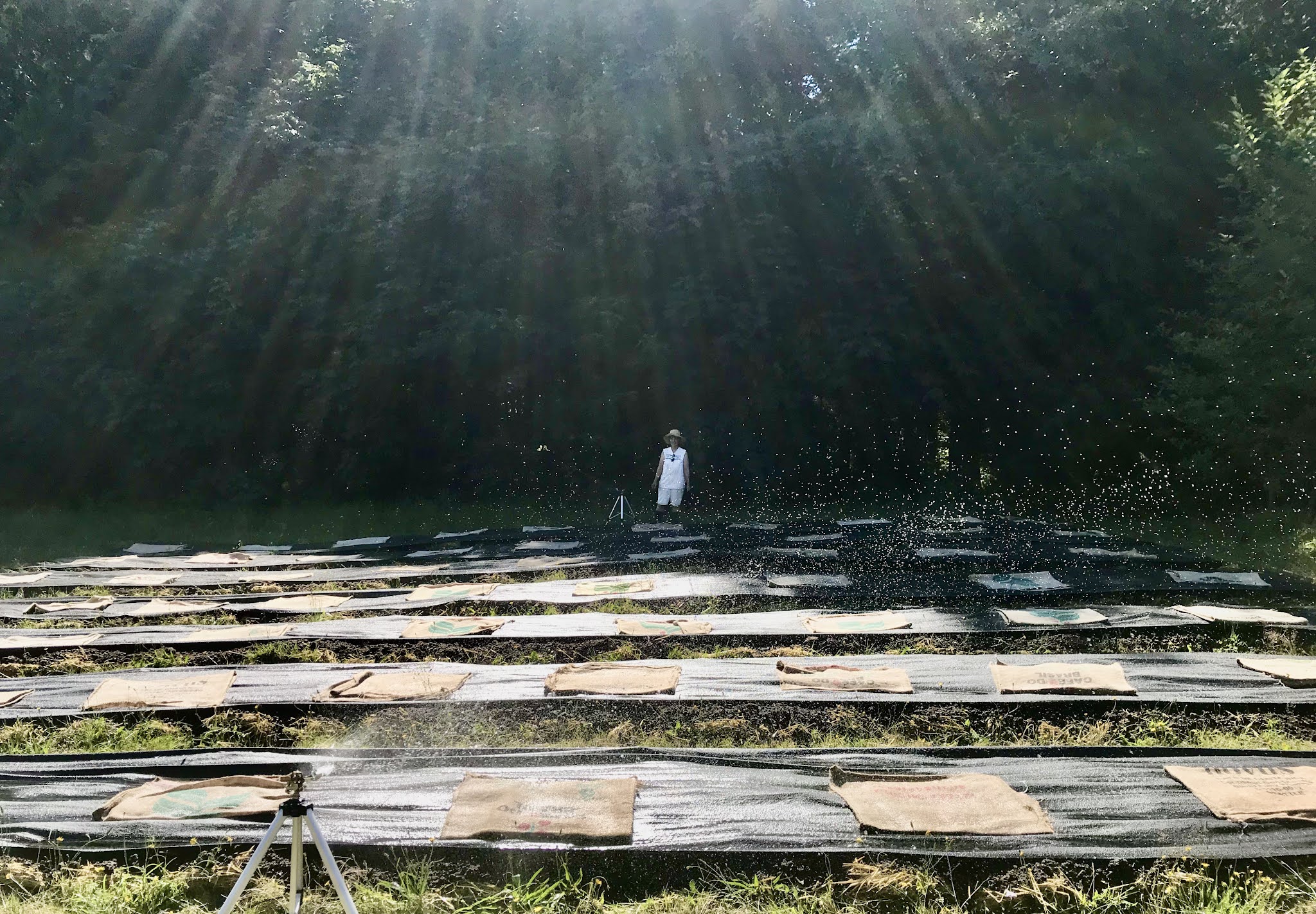
The first watering.

Wednesday, September 29, 2021

A Year in Farming

 My brother, Jim, reminds me often that he cannot believe that I bought a farm. We grew up on a farm, outside of Boise, Idaho, and being 8 years older than me, his experience of the farm was hard work and unrelenting obligations. My own experience was having 42 acres of playground that I shared with my sister, Cyndy. Only 20 months separate us sisters, so we always had a ready playmate in each other.

Shirley Girl came later, just as we were leaving our childhood farm.

But here we are, Dambara and me, despite Jim's misgivings, living on 5 acres of mostly cleared land on Camano Island, and over the past 10 months, we became flower farmers.


Being bordered by Ananda Farm Camano Island, we easily melded into the larger picture of cooperative farmers, sending all of our produce and flowers to market through the Farm, sharing our largess, receiving theirs. It's been a fabulous year, filled with challenges and victories, risk-taking and lesson-learning, moments of despair and days filled with joy.

One of the farm directors, Zach, gave us our assignment soon after we arrived, long before we had soil capable of growing anything beyond pasture, so we had plenty of time to prepare. Our assignment was flowers, onions, lettuce, and bell peppers. Easy peasy.

We spent the first year on the new property making our house habitable. I've already told that story, so you can look back at earlier posts if you're intrigued.

Friends from afar came to help.

Brilliant creativity sparkled along the way.

Many hands made many miracles.

Hot water was a turning point.

We walk on prayers every day.

The farm logo goes up.

Brother Jim made a huge difference.

Professional help from a dear friend.

Finishing touches.

We spent our second year creating planting beds, irrigation systems, a greenhouse, and a plan. That's the story that I'll be telling over the next several blogs.

And now, we're finishing up our first year as flower farmers. The weather is changing; the winds are picking up; the rains are beginning; the temperatures are falling. The time of rest and reflection are upon us, and we welcome the quiet season with a sense of accomplishment and contentedness. And preparation for spring, launching our second year wiser and better prepared. We'll take you there, if you'd like to ride along on this farming adventure.


Monday, May 4, 2020

Sheltering in Place

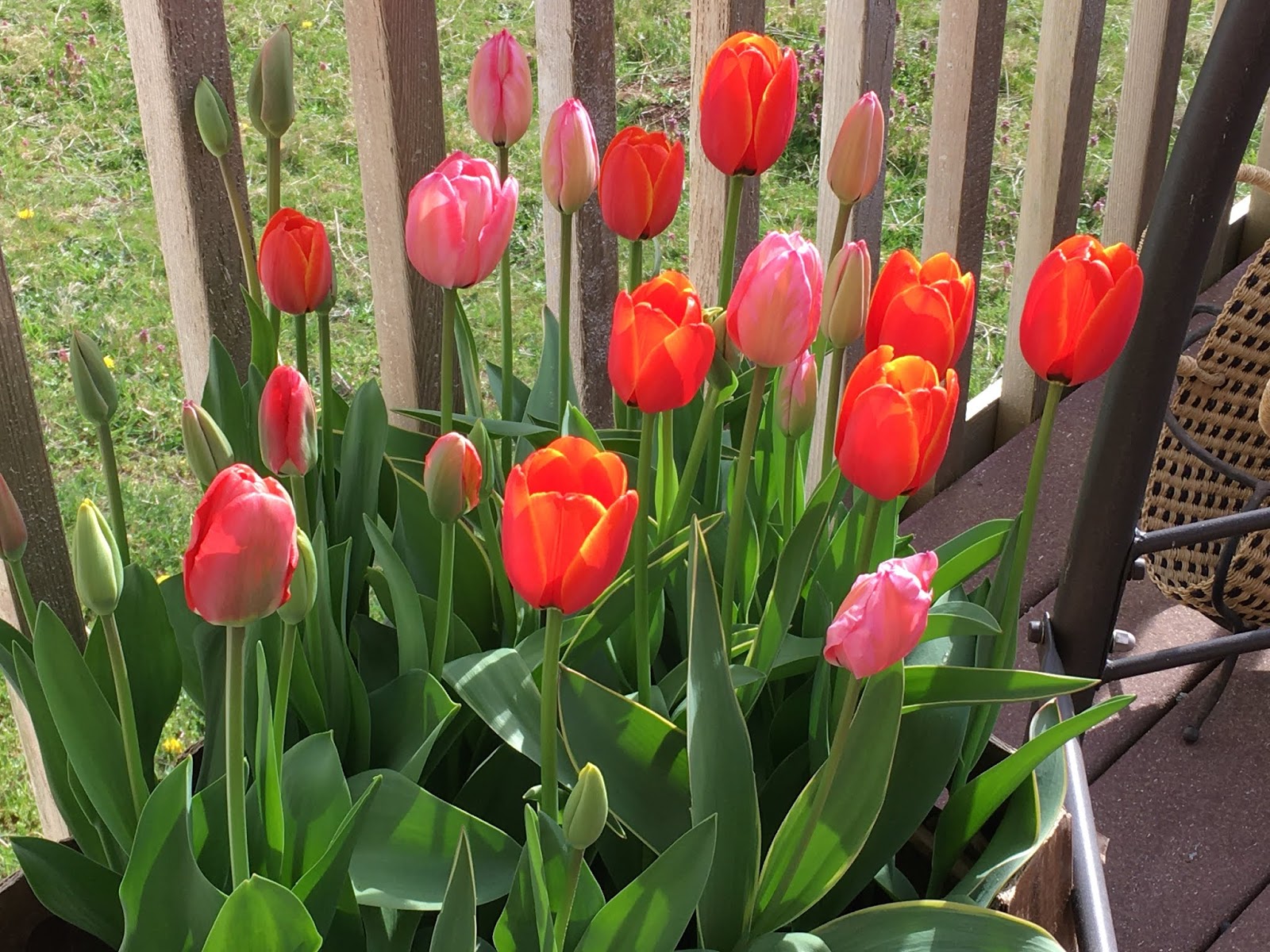
Last fall, we brought home some bulbs to plant in anticipation for spring blooms. There were some hurdles between then and now, including renovating the house so we could move in, then further renovation to bring out its beauty, then stormy weather, then missing power cords, then traveling to Jerusalem, so the bulbs never made it into the ground.

They were finally planted in some empty celery boxes, which work perfectly, since the boxes are waxed and can stand up to extended moisture. All of the daffodils fit into three boxes, and the tulips went into a fourth box, with the remaining tulips finding a cozy, dank, dark home at the base of our still-potted apple trees.

The boxes of blooms sit in sunny spots, protected from strong winds, waiting it out until next fall, when surely, surely, we'll have the wherewithal to get them into the ground. They are sheltering in place.

Happy crowd

Sheltering in place

Our household has been sheltering in place quite cheerfully. We have each other for company and occasionally spend distanced time with the other farmers. From time to time we make forays into town to pick up supplies. We've been learning how to cook foraged food, discovering great recipes as well as the sporadic not-so-great recipe, who enjoys doing which errands or tasks or projects or chores. Some things get done right away. Other things don't need doing, as it turns out.

We've watched favorite movies, jig-sawed a puzzle, painted, weed-whacked, trimmed, sprouted, and attend almost-daily ooh-aahh tours, to admire each others' progress on the things we're discovering that we love to do. Mixed in there is planning a flower farm, writing a book, renovating a neighbor's house, harvesting farm produce, creating a temple, clearing an acre or so of blackberry bramble, uncovering a chicken coop, which is now our bike shed, and a chicken yard, which is now our firewood storage, and a huge hole in the ground, which would make a fabulous duck pond.

We are dreaming and doing and enjoying and being. And we are not alone.

There has been an impressive array of shelter-in-place projects that have flowed across our screens, entertaining and inspiring our fellow humans around the globe.

Juilliard students and alumni put together a stirring rendition of Bolero.

John Krisinkski, AKA Jack Ryan, reports on Some Good News every week.

Hallelujah brings a congregation closer, at a distance.

You can find makeup advise, from England.


Ski adventures on the floor.

An operatic family.

Animals at home in thick, urban jungles.


Hundreds and hundreds more all speak to the fact that we are an amazing species, that we can get through anything, and that the planet will heal itself, whenever we're able to let it.

And because today is today, may the fourth be with you.

Saturday, May 2, 2020

Finishing Touches

Years ago, Dambara and I spent 4 weeks in India, on a pilgrimage led by Asha Nayaswami, David Praver, and Durga and Vidura Smallen. About 35 pilgrims traveled around northern India, visiting places mentioned in the Autobiography of a Yogi, central to our spiritual path. We stayed in very nice hotels because it helped all of us recharge at the end of each day to come back to comfortable rooms, fabulous food, and hot showers.

Many of the hotels were luxurious; some were modest. All of them had one common aspect: neglected edges.

One hotel in particular stands out in my memory. We stayed in Badrinath, at the very northern tip of India, a stone's throw from Tibet, for two nights. It was a bone-rattling journey to and from, in jeeps that clattered along a breath-depriving, narrow, dirt road that was vaguely scratched out along the treacherous steepness of the Himalayan mountain sides. We arrived, drained from hours of terror, and checked into our rooms.

The hotel was very high end, with en suite rooms, tall windows, expansive dining room, and beautiful, marble slabs lining all of the walls, everywhere. But the hotel felt neglected to me, unfinished, untidy. It took me a while to realize that it was because all of the edges were unfinished.

Along the hallways, banquet rooms, dining hall, the beautiful marble flowed down the walls to meet the beautiful marble of the expansive floors. The jagged edges of the walls met the jagged edges of the floors, and those jagged junctions were dusted with bits of rubble, grit, and dust. It felt as though the hotel was still under construction, but it had been in operation for two years. It was finished.

Spring blooms, check!


Years earlier, traveling with a friend through Greece, again and again we had to pick our way past rubble scraped up against the side of enormous buildings; banks, office buildings, apartment buildings. Again, it felt like a construction zone, and yet on closer examination, it was obvious that the rubble had lain there for months, perhaps years. The ornate buildings were opulent, gorgeous feats of architecture, with high-end businesses and residences, but the attention to detail ended before it considered the unfinished edges. There they persisted, neglected and ignored.


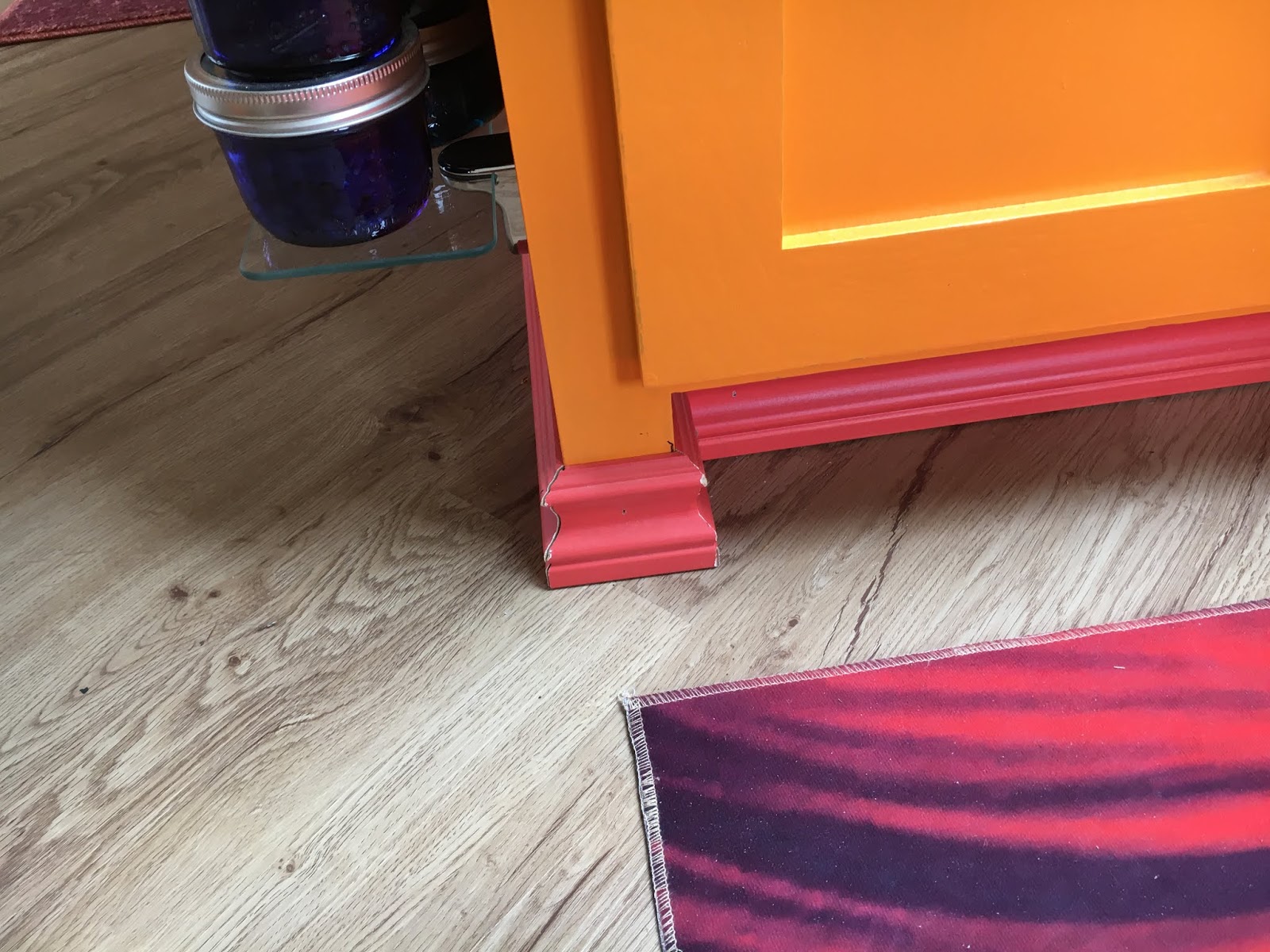
Baseboards, check!


Edges are an important part of finishing touches. The renovation at Haven West doesn't feel complete until the edges are complete. The beauty and magnetism of the rooms blossom into being with the finishing touches that occur to one or the other of us.


Toast and bread counter, check!


And as the work spaces become more useful, we come across things in drawers or out of boxes that would make that spot prettier or easier to use. It's a work in progress, a creative process.


Outlet plates, check!
 We continue to surprise each other with creativity and thoughtfulness. Form and function cooperate to transform every corner of the house into spaces that we enjoy using, spending time in, sharing friendship and laughter.

It is a wonderful world.

Spice shelves, check!


Farming with a Trowel

I was about six years old when I started tending my first garden. Even then, I loved pulling away the chaotic weeds to make room for orderly...