Showing posts with label many hands. Show all posts

Wednesday, October 20, 2021

Global Connections

I’m a scientist by temperament and by training. For many years, I worked as a biologist in a pharmaceutical company. Our research department had a sister department located in Japan. Because of this partnership, our lab had a series of visiting scientists from Japan. They were always young people, with a spouse and perhaps with a fledgling family, trying to fit into this foreign place. Since science is internationally interwoven, we had visiting scientists from other countries as well: Australia, Brazil, England, France, Spain, Switzerland, Sweden. They would stay here for perhaps two years, and then return to their own labs in their own countries.


Halloween is a traditional American holiday. It can easily appear silly to people from other cultures. They just don’t quite get it. So every Halloween, my housemate and I would invite the visiting scientists and their families to our home to carve pumpkins. We’d also invite a couple of Americans and their children, to create a balance of experience and bafflement. We’d all sit on the floor throughout the house, newspapers spread in front of us, fresh pumpkins at hand with more on the lawn outside, and tea candles ready next to the front door. We’d start to carve our first pumpkin.

You know, if you’ve ever carved a pumpkin, that it can be a gooey mess. If you’re from another culture, like Japan’s, where food and body are kept very clean and very separate from each other, pumpkin carving could appear completely puzzling, intimidating even. But all of our guests politely started, regardless of inner turmoil, watching nearby friends for clues. The experienced carvers would offer witty advice wherever necessary, and generous encouragement to cautious skeptics.

Imagine the surprise and dismay of opening your first pumpkin and looking down into all that pale orange mess, the strings, the seeds, the oddity of it, the slippery randomness of it. Imagine reaching your hand in and feeling the slime and the endlessness of those inner curves. But looking around, others are doing the same thing, talking and laughing, so you bravely move forward, scooping out the seeds, scraping out the strings, cleaning out your hollow. Okay, now what?  Draw a face??  A scary face???

The first set of jack o’ lanterns are simple and a bit awkward. Two eyes, a mouth, sometimes with teeth, maybe a nose. As each person finishes his pumpkin, he stands up, carries it to the front door, inserts a tea candle, sets the pumpkin in the garden outside, and lights the candle.

Night is falling, and slowly the garden fills with jack o’ lanterns. The candles softly glow, brightly, then even more brightly against the darkening backdrop. The Japanese eyes fill with delight.  The French man grins and scurries off to get his next pumpkin. The Australian scrutinizes the others’ handiwork and tackles his next globe with blooming creativity. The carved faces become haunted, or lecherous, or jeering. Carved flames leap from mouth corners; carved eyes glower. The jack o’ lanterns are no longer consigned to the lawn; now they’re lurking behind rocks, gaping up from under a bush, cackling down from a tree branch.

The transformation is complete, for pumpkins and humans alike. We gather with hot apple cider and wander around the garden, delighted. My Finnish friend puts her arm around my shoulder and says delightedly, “Now I understand Halloween. Now I get it.”

So here I am on the spiritual path.  I have arrived at the party and understand portions of what I’m encouraged to do.  I look around at people I trust and admire, and pay attention to the example they set.  I’m learning that the way to learn is to do.  I’m delving into my pumpkins, each and every one of them, creating the most magnificent jack o’ lanterns that I can.  And I trust that by the time I’m standing in the garden, sipping hot apple cider, watching the glowing faces around me, I will understand why God is expending so much energy to create us, waiting for us to search for Him, and then helping us to find Him.

Monday, October 18, 2021

Irrigation for Camano Summers

I've always thought that the Pacific Northwest had rain all year round. Maybe rain used to fall during the summer season; it doesn't seem to now. Global warming is inching its way up our coast, parching our little farm on Camano Island, a hop, skip, and a jump south of the Canadian border.

We started transplanting all of our flower and veggie seedlings in April, right after our last-frost date, starting with our cold-hardy varieties of onions, lettuces, and cresses. We plowed right along on our transplanting schedule, populating more and more beds with their tiny populace.

And then, the rains stopped early. With thousands of fragile seedlings taking their first breaths in their new beds, we spent hours each week hand-watering those beds. With the beds stretching long, the seedlings raising skinny arms to the sun, and hoses thick and heavy, we teamed waterers with hose managers to navigate the delicate edges of each planting bed.

We had calculated another month before the rains stopped, and so found ourselves suddenly behind on our irrigation-building plan. We shifted gears and, in between hand-watering and transplanting, we built our irrigation systems.

Wobbler warriors.

They were twofold. We needed overhead watering for the tiny seedlings to supplement the main system of drip tapes. Once the seedlings grew large enough, we could abandon overhead watering for the more efficient drip watering. We used wobblers for overhead systems, four wobblers to cover each planting section. We set them up for manual management, since we wouldn't use them for long. 

Connecting drip tape.

Happy seedings. Happy plants.
Separately, we stretched drip tape along the extent of each bed, four tapes for the wider beds, three or even two tapes for the narrower beds. 

Wobblers and drip tape, both.

All of the drip systems are on timers, five timers in all. It's too easy to forget to turn off a sprinkler, or even to turn it on in the first place. With summer drought on our horizon, timers ensured that everyone would have enough water to thrive. Sun, water, good soil, healthy seedlings; a successful formula.

Each timer gets its own post. Prashama is a strong post-pounder.

Then our water pump gave out. We noticed lower and lower water pressure whenever we were hand watering. Drips were smaller and less frequent, all along every drip tape. Our showers dribbled; our washing machine stalled; our water bottles filled languidly.

Then it all stopped. We had no water.

Upon consultation with our cooperative-farm directors, we stretched four, long hoses from the neighboring pump house and hooked it into our water-supply line. Upon consultation with several well-professionals, we eventually replaced our 18-month-old water pump with a new pump. The well-wizzard also hauled an impressive pile of metal debris out of our well, clearing the space for the new pump.

The flower beds under the summer sun.

Thriving.

We continued borrowing our neighbors' water for a few more weeks for the gardens, while our well supplied our household water. We were finally able to switch to our well exclusively, and fingers crossed, we've made it through the drought summer. We still need to install a pressure tank to protect our water pump from all those dripping tapes come next summer, but that's another story for another day.

Friday, October 15, 2021

Planting Seedlings Early, Late, and Just in Time

There are times when two people cannot contribute enough hands to get the job done. We were extraordinarily blessed in the spring of 2021, when our friend, Dora, offered to come and help us get our planting beds up and running.

Dora at the prana table.

There were a few preliminary projects. We had to remove the bird netting, roll it up, tying each bundle securely, and stashing them away. Ditto for the landscape fabric, the twine, the fabric staples, the rocks, the branches.

Our hard work paid off.


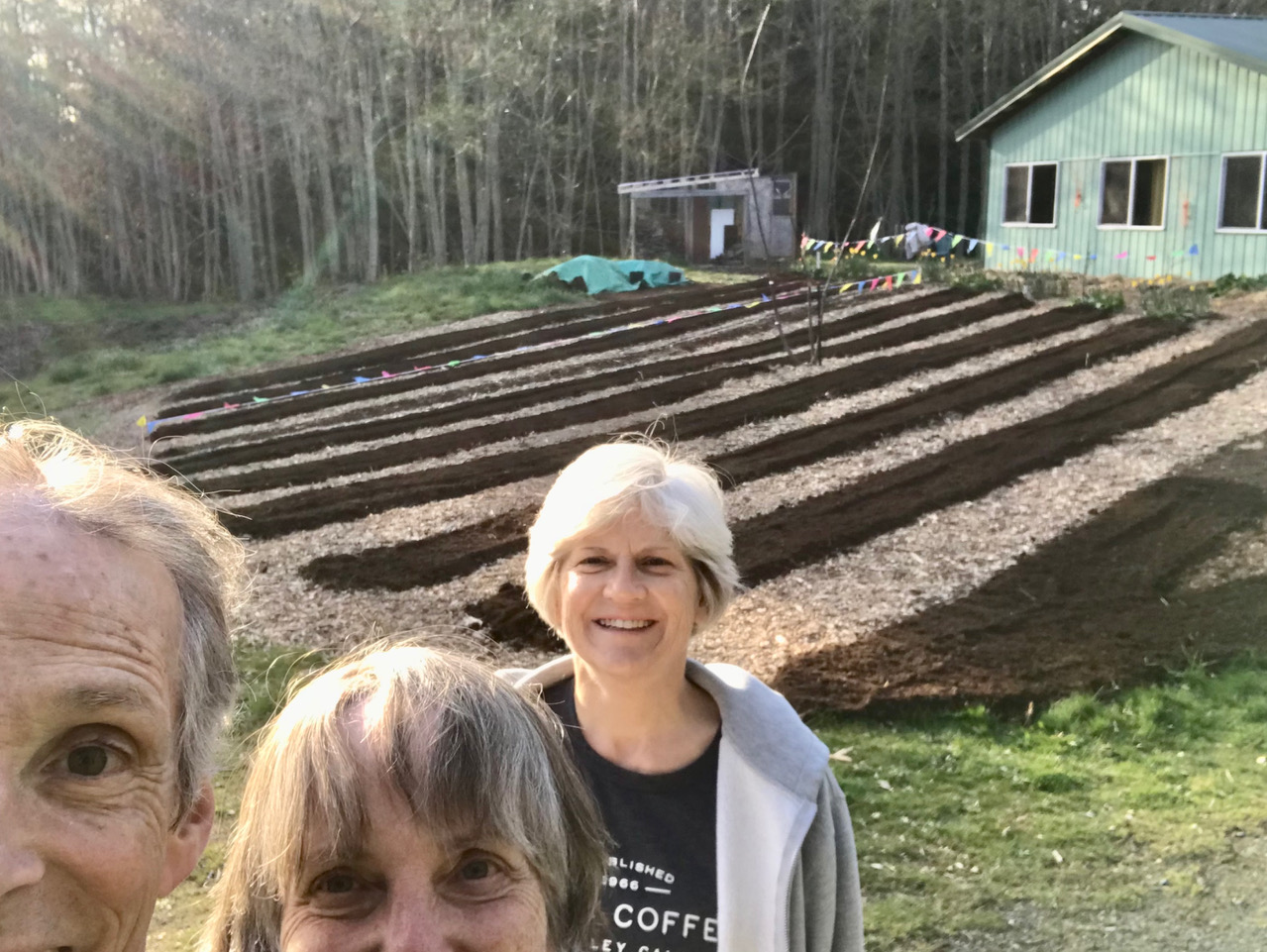
As we unzipped each bed, it seemed clear that our over-wintering strategy had worked. The beds were pretty much weed-free. We scattered some soil supplements and tilthed the top layer of compost, mixing everything together easily and neatly.


We had two types of seedling trays. We had set our sights on using a paperpot transplanter that we had inherited from a friend. In theory, we could transplant 256 seedlings in less than a minute. I had used it successfully in another garden and was enthusiastic about our success in getting all of our transplants into their beds.

Unfortunately, the straw underlayment had not broken down completely. It caught in the furrower of the transplanter, and hiccuped our progress into frustration and despair. Luckily, Dora and Dambara were able to persevere, and they got all of the paperpot seedlings into the ground.

We also had 50-cell tray seedings. Each seedling went into the ground as we scooted our way down the beds. With three of us scooting, we were able to get all of these seedlings into the ground as well.

We up-potted many of the seedlings, to allow them to gain size and resiliency before going into the ground. Especially the sprawlers, the squashes and cucumbers, would benefit by being older when they went into the ground, when the days and nights were warmer.

The veggie beds, a month into transplanting.
The three of us got it all done. But we had adversaries: one pint-sized and a trillion pea-sized.

The robin who owned our veggie meadow delighted in pulling up our fragile seedlings. He didn't eat them; he merely pulled and dropped them, gasping, at the cusp of their former lodging. He did this over and over, and we determinedly followed after him, replanting the gasping youngsters.

It was the trillions that worked faster than we could. Pill bugs. Trillions of them. They had overwintered, snug as a bug in a rug, under our brilliant solution of landscape fabric, feasting our our brilliant solutions of straw, compost, and wood chips.
We lost 90% of our onions, shallots, and leeks, and most of our spinach and lettuces. There were trillions of them. They didn't care for cilantro or arugula, asparagus or carrots, so we had many successes, too.

Flourishing flower beds.

Researching strategies for combatting pill bugs: Eliminate all decaying straw, wood, and compost. Well. Then we'd be back to native soil, so those strategies won't help. Spraying: Not part of our farming strategy. The one that would work: Transplanting older seedlings so they can outgrow the munch rate of the pillbug hordes. I'm thinking it will also help if we eliminate the winter covering of landscape fabric. That's a happy thought, since keeping the fabric in place was a huge pain last winter.


Transplanting older seedlings also eliminates the paperpot transplanter. That's actually okay, too, since that allows us to use straw again this winter to help further build our soil.

So. We learned a lot. We accomplished a lot. We conquered a lot. And if it hadn't been for Dora, it wouldn't have happened. Dora saved our spring and our farming year. Thank you, thank you, Dora. You are a jewel.

A jewel of a friend.

Tranquility.

Saturday, May 2, 2020

Finishing Touches

Years ago, Dambara and I spent 4 weeks in India, on a pilgrimage led by Asha Nayaswami, David Praver, and Durga and Vidura Smallen. About 35 pilgrims traveled around northern India, visiting places mentioned in the Autobiography of a Yogi, central to our spiritual path. We stayed in very nice hotels because it helped all of us recharge at the end of each day to come back to comfortable rooms, fabulous food, and hot showers.

Many of the hotels were luxurious; some were modest. All of them had one common aspect: neglected edges.

One hotel in particular stands out in my memory. We stayed in Badrinath, at the very northern tip of India, a stone's throw from Tibet, for two nights. It was a bone-rattling journey to and from, in jeeps that clattered along a breath-depriving, narrow, dirt road that was vaguely scratched out along the treacherous steepness of the Himalayan mountain sides. We arrived, drained from hours of terror, and checked into our rooms.

The hotel was very high end, with en suite rooms, tall windows, expansive dining room, and beautiful, marble slabs lining all of the walls, everywhere. But the hotel felt neglected to me, unfinished, untidy. It took me a while to realize that it was because all of the edges were unfinished.

Along the hallways, banquet rooms, dining hall, the beautiful marble flowed down the walls to meet the beautiful marble of the expansive floors. The jagged edges of the walls met the jagged edges of the floors, and those jagged junctions were dusted with bits of rubble, grit, and dust. It felt as though the hotel was still under construction, but it had been in operation for two years. It was finished.

Spring blooms, check!


Years earlier, traveling with a friend through Greece, again and again we had to pick our way past rubble scraped up against the side of enormous buildings; banks, office buildings, apartment buildings. Again, it felt like a construction zone, and yet on closer examination, it was obvious that the rubble had lain there for months, perhaps years. The ornate buildings were opulent, gorgeous feats of architecture, with high-end businesses and residences, but the attention to detail ended before it considered the unfinished edges. There they persisted, neglected and ignored.


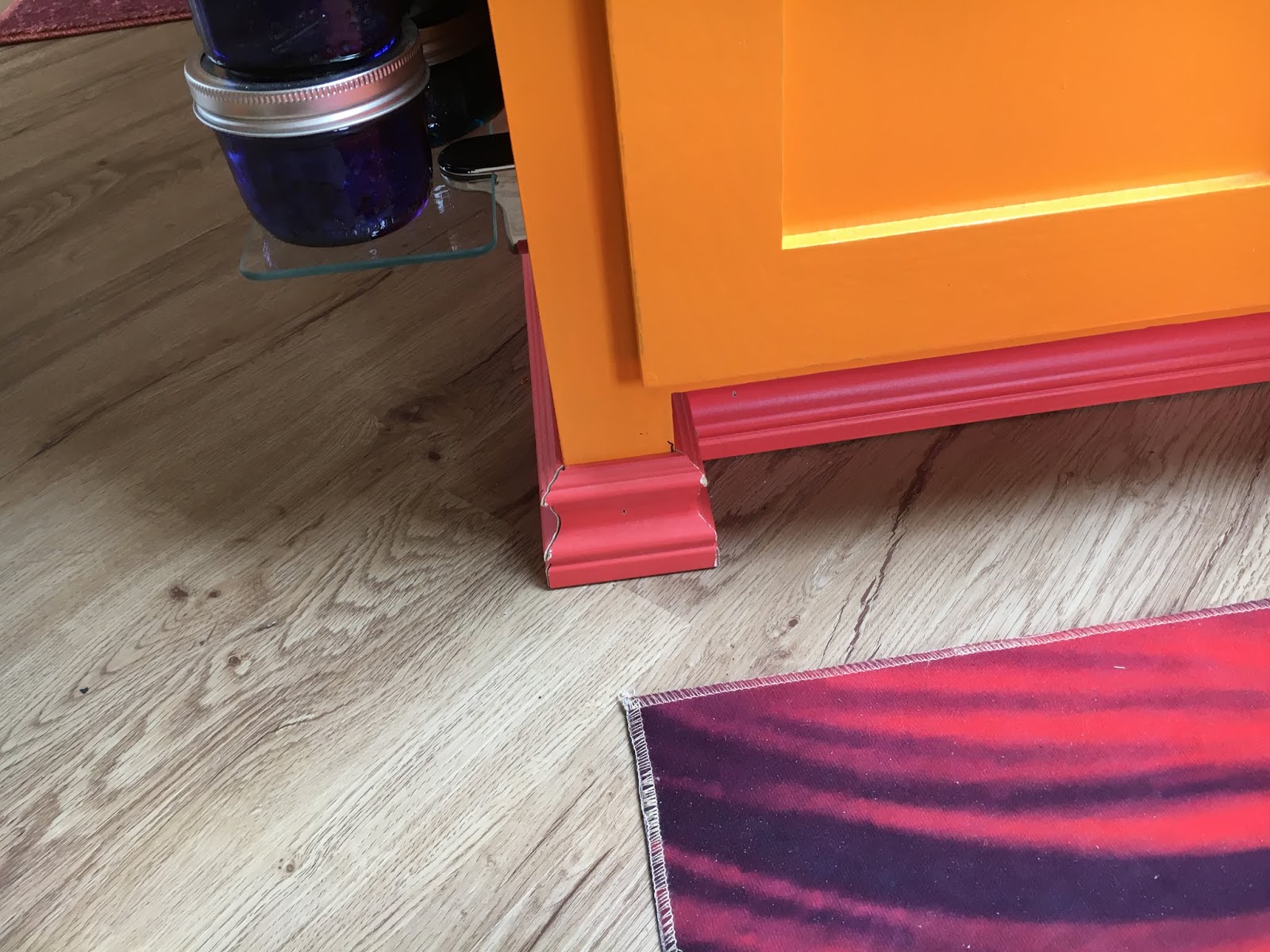
Baseboards, check!


Edges are an important part of finishing touches. The renovation at Haven West doesn't feel complete until the edges are complete. The beauty and magnetism of the rooms blossom into being with the finishing touches that occur to one or the other of us.


Toast and bread counter, check!


And as the work spaces become more useful, we come across things in drawers or out of boxes that would make that spot prettier or easier to use. It's a work in progress, a creative process.


Outlet plates, check!
 We continue to surprise each other with creativity and thoughtfulness. Form and function cooperate to transform every corner of the house into spaces that we enjoy using, spending time in, sharing friendship and laughter.

It is a wonderful world.

Spice shelves, check!


Thursday, April 30, 2020

Nested Horizons

An artist in Aptos, CA, fills her studio with fabric art. She took her love of fabric and her husband's love of flying small planes and created a plethora of landscapes created with softly colored fabric, layered to portray the view from a small plane. Small planes fly at a lower altitude, so you see more details of the landscape below you. Lower altitudes also are rich in the phenomenon of nested horizons, the vista of a series of receding mountain ridges, colorful and detailed in the foreground, dimming in color and detail as they fade into the distance.

I fell in love with nested horizons in her Aptos studio and experienced them myself when I flew small planes, decades ago. You can also see them driving through the Central Valley of California and from many vista points along highways and hiking trails. Nested horizons speak to the soul of soaring like a bird, freely floating across the landscape, an immersion into something far larger than yourself. Nested horizons can evoke a spiritual experience that soothes your soul and expands your consciousness.

I dabbled with nested horizons a bit when I was doing a lot of watercolor. But I was never transported by the landscapes I was able to create with my limited knowledge and experience with watercolor. The paint dried too fast. The detail was hard to capture. The crispness of the ridge lines was hard to maintain with successive layers of paint. It became tedious rather than transformative.

As it turns out, all that needed to happen was a change in medium. As it turns out, wall paint works wonderfully well.

Nested horizons
In the kitchen at Haven West, we keep our small appliances on a butcher block table, all of them set up and ready to use. The wall behind the butcher block is quite high, perhaps 11 feet. It's a big, blank expanse of wall, or a big, blank canvas, depending on how you look at it. It was waiting for something of interest to display. I was looking for something creative to lift my spirits.

Enter nested horizons.

We had plenty of paint left over from our kitchen-cabinet project, plus some tan and blue left from painting the bathroom. All of the colors were enamel, so they had a soft sheen to them, setting them apart from the flat peach of the kitchen wall.

The colors went up in order of increasing vibrancy, enhancing the visual of receding into the background. The household voted for jagged ridge lines, since the Cascade and Olympic ranges visible from Camano Island are dramatically jagged. It was easy to sketch out and easy to paint, because I could concentrate on the crisp edges without worrying about the paint drying before I could fill in the middle.

Even though it cost me a week in bed with muscle spasms from my craning neck, I would do it again in a heartbeat. It was so much fun and turned out so pretty.

Second coat for the tangerine range
Everyone in the household helped out. Dambara installed the remaining shelves for the wall. Celeste Sophia pulled three, unused cable boxes out from the wall. Vihaan installed baseboards and patched and painted the empty cable-box holes. Celeste Sophia added under-the-shelf lighting and a painted edging for the shelf, shielding our eyes from the lighting and helping the shelf to blend into the nested horizons. She also painted the cord for the lighting and the brackets for the shelf, helping them blend into the background, too. Celeste Sophia and Vihaan tackled the dangling electrical cords from all of the appliances and brought them into coherency and invisibility.  As a final touch, Dambara added Waldo.

We all oohed and awed as the various elements fell into place.

And now we have a beautiful work station for juicing and mixing and baking and chopping. A perfect project for a drizzly week.

Find Waldo

Sunday, April 26, 2020

Time for Color

Back in the beginning of March, before the world changed, our friend Tom came up to visit, bringing along with him his expertise as a professional house painter. He had agreed to help us paint our kitchen cabinets.

The cabinets were actually in great shape, the one, undamaged feature of the house when we bought it last summer, as is. But they were brown. After decades of bland walls and drab kitchens in house after house after house, it was time for color.

Brown and Drab
We painted the walls last summer, a delicate peachy blush, and the open pantry took on a rich coral, a slice of watermelon in the corner of our kitchen. We had always planned to paint the cabinets; now was the time.

So, Tom arrived on a Sunday afternoon, fresh from his train ride up from Portland, and we strategized a plan, rolled up our sleeves, and started prepping.

Prep, prep, prep


We decided to take off all of the cabinet doors, remove all the hardware, prep all the surfaces, and have everything ready to go, for an early start, first thing Monday morning. The kitchen is quite large, and after setting up a long, folding table, we had enough room to lay out all of the cabinet doors, arranged by their finish color.


Because, it's time for color, and we householders had picked out three, vibrant colors, colors that shocked the Ace Hardware staff, colors that jumped out at us, colors that all of us fell in love with.

We all had a vote, and we came to unanimous decisions for each block of cabinetry. We had paint, brushes, drop cloths, stir sticks, rags, high spirits at the ready, and Tom as our ringleader. Nothing could stop us.

Except, of course, the wallpaper in the half bath that decided to succumb to gravity and stealthily peeled itself off the wall during the dark silence of night. It was that new-fangled, self-adhesive, vinyl stuff that seems to be all the rage nowadays. The trend has shifted toward wallpaper that is easy to get off the wall, and sure enough, the compromise is that it's reluctant to stay on the wall.

So Dambara and I spent a half hour or so unraveling the wadded wallpaper, since it exuberantly sticks to itself, then finessing it back up onto its assigned wall space. Stay.

Meanwhile, Tom's clicking tongue got us scurrying onto our real project for the day, priming the cabinets and doors.

Easy peasy.

Actually, it was wonderfully easy.

Except the primer insisted it needed 24 hours to dry. Two sides to each door; 24 plus 24 added up to too many days, since Tom was heading home on Thursday morning. We only had 3 days. So, we flipped the doors at the end of the day and primed the underside of all the doors, giving both sides overnight to dry.

The priming turned out great.

We had three separate colors for the cabinets. A minty green for the upper cabinets, a bright cantaloupe for the island, and a rich tangerine for the lower cabinets. We set to work, painting the first side of every door, then while that coat dried, painting the cabinets themselves, the kick plates, and the island. At the end of the day, we flipped the doors, put a first coat on the second side of each door, cleaned up our brushes, and called it a day.

Manisha, the helper
Tom, the craftsman
Dambara, the apprentice


It took two coats for the green and tangerine cabinets; four coats for the bright cantaloupe. Who would have thought? Those three days were long days. The camaraderie was cheerful and fun. The colors were amazing. The transformation was. . . awesome.

We all loved it.

Time for color

Bright cantaloupe of the island

Tom packed up his slippers and his paintbrush, waved goodbye from his window seat on the train back to Portland, and had a restful trip home. He left behind happy friends and a world filled with color.

After two months of living in our bright, cheerful kitchen, we can all say, "Thank you, Tom! This is the most beautiful kitchen, ever!"

Thursday, February 27, 2020

1, 2, 3

A newly functional room
We've reached the stage in our home renovation where the giant projects are pretty much done, and we're finally able to finish up some minor projects. My brother, Jim, drove up from the Bay Area two weeks ago and helped us install some shelving and the utility sink in the laundry room. That room has transitioned from big-box storage-cave with a narrow passageway wending through, and is now a fully functional laundry room.


Even the towel rack is up.
While Jim and Dambara navigated the shelving and utility sink, I painted and wallpapered the half-bath off the laundry room. After Vihaan put down baseboards, Jim and Dambara installed the vanity, sink, and mirror. That room, too, has transformed, from a gritty-floored narrow-cave to a delightful little powder room.

The best thing about the ongoing nature of home renovation is that we've been forced to live in grimy, icky spaces, and in the case of this house, dog-gnawed door frames and clawed up doors. Each transformative project carries with it immense improvements that we delight in again and again, every time we walk into a room, or turn on a light that didn't exist for months, or a newly useful sink for washing hands or cleaning paint brushes and muddy shoes.

No lights becoming 1, 2, 3 lights.
Speaking of lights that didn't exist, the dining area in our enormous kitchen had no lighting whatsoever. Months ago, we found some pendant lights that we both really liked, so we had them shipped to us, carted them down to Hippo Hardware in Portland for retrofitting from a dangling-chain mounting to a brushed-nickel pipe-mounting, and then they went dormant, languishing on the top of the kitchen cabinets, out of harm's way.


1, 2, 3 oyster-shelled dandelion-heads
Yesterday, Dambara reconfigured his tool belt and started the electrical project of bringing power up from a mystery light switch next to the doorway to span the length of the dining area, and today he anchored, wired, and hung the fixtures. After a quick trip to the hardware store for a dimmer switch, he finished off the last touches, and now we have light over our dining table.

1, 2, 3 lights, all in a row, aglow.

Up next week, Tom and cabinet painting! Our days will be full. Once the kitchen cabinets are painted and the open shelving back in place, we'll be able to step out into spring and focus on the gardens and the farm.

Stay tuned. . .

Sneak preview

Thursday, January 23, 2020

The Power Gap

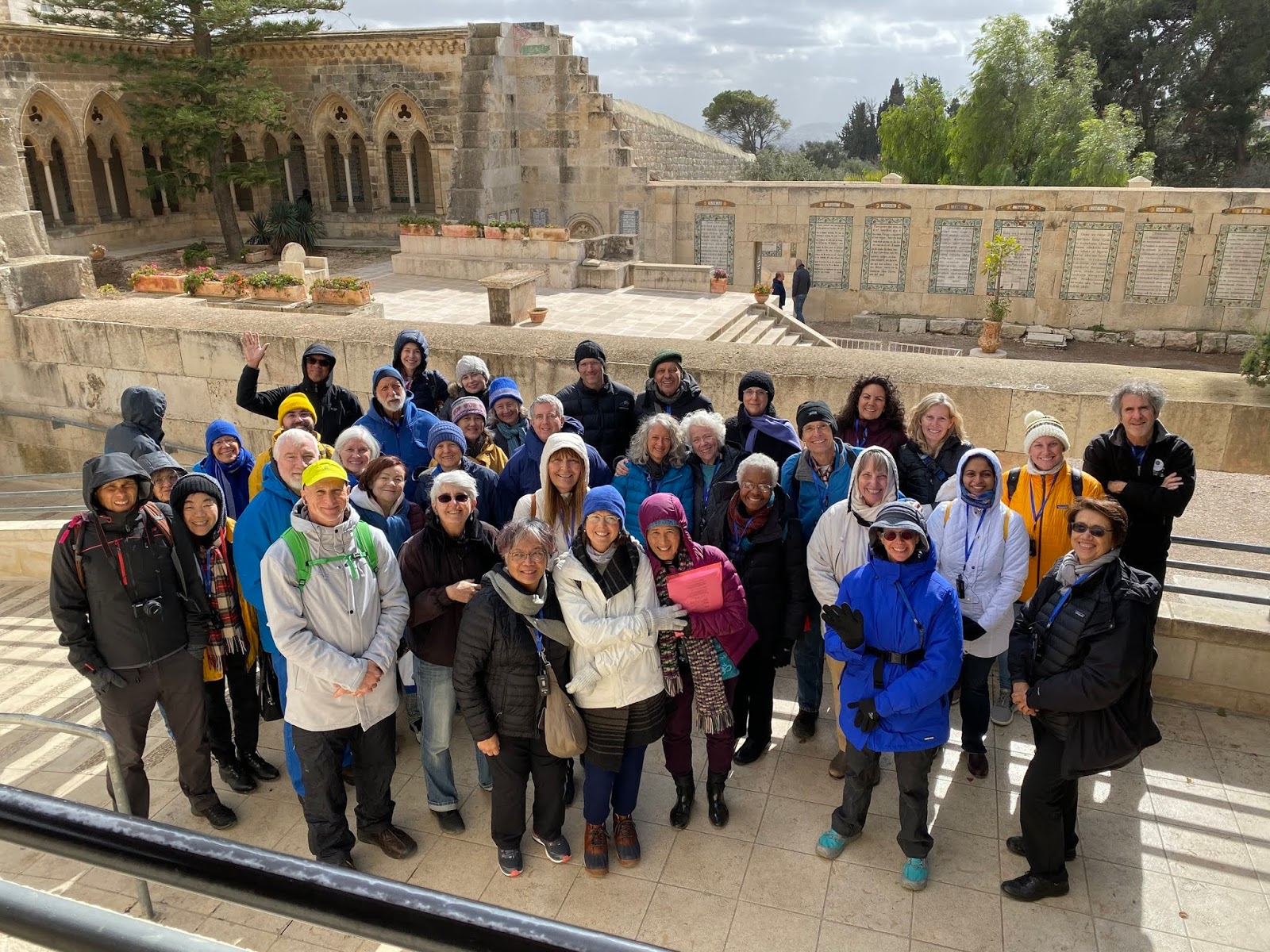
We are in the gap between two pilgrimages. The first pilgrimage, with Ananda Palo Alto, finished on Sunday evening with heartfelt reminiscences of highlights of our two weeks together in the Holy Land.


At the top of everyone's list, it seemed, was being able to spend time together at many, many holy sites. Time together. That was the highlight for me, too.

Time with dear friends, most of whom we've known for 20 something years, growing alongside each other in our spiritual lives, enjoying being together in prayer, meditation, song, laughter; it's been a magical two weeks.


Listening to Asha, Shanti, and Rami, our Israeli guide, orient us to what we're seeing, where we're going, what we'll be doing. Rami gave us each a Whisper receiver, so Shanti or Asha or Rami could be talking softly in our ears as we stood and gazed or wandered around each lovely destination.

Heaven on earth.

By the time we arrived at our final gathering on Sunday night, we had many, many stories to retell, laughter to reshare, and insights to reveal.

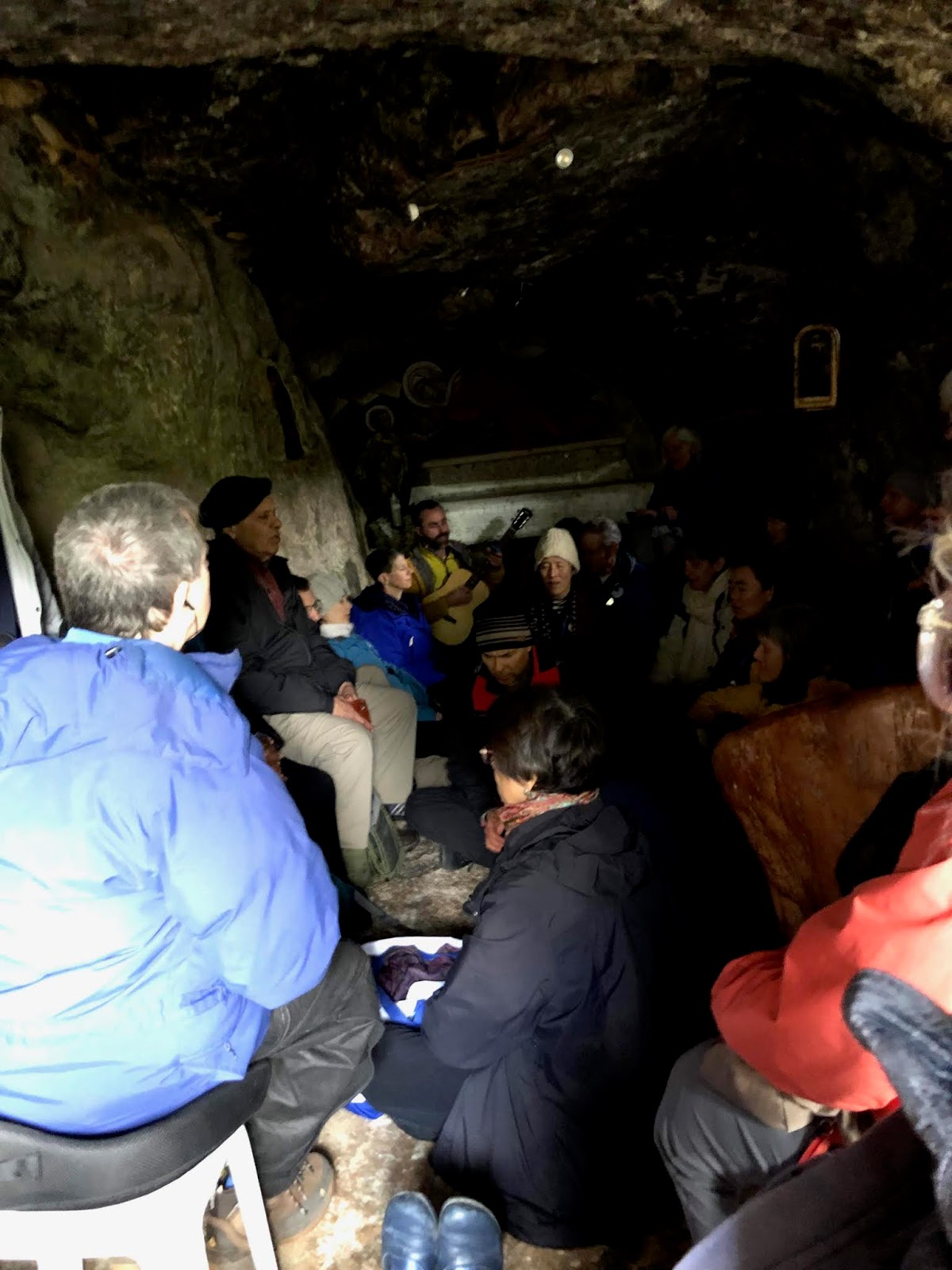
And then we sang, just as we had sung everywhere we went. Practically the entire group was part of the Palo Alto choir, so wherever we went, we sang, and it was glorious. Tandava played the guitar, Dambara played a small keyboard, the rest of us sang. In courtyards, under trees, in churches, in caves, we sang, and we sang.

Asha hugging Rami.
As a going away gift for Rami, we had been practicing two Hebrew songs, on our own for the last several weeks, and then together a couple of times. At the end of our farewell gathering, we stood and sang the Israeli national anthem, in Hebrew, for Rami. Then we sang a popular song, Shalom Lach Eretz Nehederet, Hello You Beautiful Country, which uses the same melody as City of New Orleans. Steven sang the first verse, we all sang the chorus; Dambara sang the second verse, we all sang the chorus; and Tandava sang the final verse, and then we all sang the chorus, several times, clapping, stomping, laughing.

We also sang one of Swami Kriyananda songs, A New Tomorrow, which is actually a hora, so we circled up, back-stepped, kicked, kicked, back-stepped, kicked, around the circle, our amateur rendition of the traditional Jewish dance. What might have been a sad last gathering was instead a rousing, joyful celebration.

People trickled away over the next few days, traveling home, WhatsApp-ing each other across the globe, transitioning back to everyday lives, holding the glow of pilgrimage in their hearts.

Everyone trickled away except Asha, Dambara, and me. Asha is staying because a new pilgrimage has started to trickle into Jerusalem from India, and she will be leading these Indian pilgrims through the same holy sites that we just completed, along with four Ananda leaders from India.

Dambara is staying to bring music into this second pilgrimage. The choir has trickled home, and only a few in the second pilgrimage know the music, so Dambara will anchor the music in a way none of the rest of us can. Singing was an integral part of the inspiration for the first pilgrimage. Of course we wanted to include song in this second one.

The second pilgrimage has its first gathering tonight, just before dinner. Everyone has been traveling all day long, and even though there is only a three-hour difference between Israel and all of India, it is a long journey, and people will be quite tired, ready to rest. We'll gather briefly, have dinner, and then people can go rest.

Tomorrow morning, the journey begins.

So, we've had this four-day gap between pilgrimages. It's been a restful time, a regrouping time, but surprisingly, it's also been a power-gap time.

Forty-some world leaders have been traveling, making their way to Jerusalem, alongside our pilgrims, for a remembrance of the liberation of Auschwitz, 75 years ago today. This meeting will help bring into focus the rising incidences of antisemitism we've seen over the last couple of years, and hopefully acknowledge the worldwide need for constructive action.

The King David hotel on the far left,
Old Jerusalem in the background,
taken from our balcony at the King Solomon Hotel.
The power meeting happens to be taking place at the King David Hotel, which is across the street from the King Solomon Hotel, where we're staying. We've watched the security ramp up as we thread our way along barricaded sidewalks toward the Old City, visiting the same sites where we've spent time during our pilgrimage, and which are now being visited by world leaders. We go in groups of 2 or 4; they go in triple-digit groups.


But it all works! We're free to come and go as we please; they jostle through politely, ambitiously, and it all just works.

I'm finding that a power gap is much better than a soft gap between these two pilgrimages. There's a definitive change in the atmosphere, so that we can move beyond the energy of the first pilgrimage and have a clean slate into which the second pilgrimage can step. The sadness of missing our trickled-away friends has been overshadowed by the power that motorcades past our dining room windows or below our balcony.

The timing is perfect. Our pilgrims are trickling into the King Solomon Hotel just as the world powers are trickling away from the King David Hotel. Tomorrow, the refreshed pilgrims can step into a refreshed Jerusalem, led by a refreshed Asha, singing with a refreshed Dambara.

It's heaven on earth.

Monday, January 6, 2020

Big Brothers Are the Best

A couple of weeks ago, my brother Jim, flew up from the Bay Area to help us with a couple of projects on our house. Years ago, he built his own home, so has a credible accomplishment under his belt, and as far as I can tell, he knows everything about everything. He's the best big brother ever.

Our main project was building shelves in the master closet. Celeste Sophia had already demo-ed the old, wire shelves. You know, those cheap-o shelves that allow things to fall through or capsize if you don't place things on them just so. I wanted real shelves, solid, durable, strong, pretty. So, thanks to Celeste Sophia's hard work, we only needed to do a bit of sanding to finish her expert hole patching, a quick wash with TSP, and we were ready to go.
Big brothers are the best
Dambara chose the paint color, and a gallon of it had been waiting for us for a few weeks already. The whole idea for closet paint colors came from our good friends, Devidasi and Alex, who designed and built their house at Ananda Village a few years back. Alex prefers neutral, soft colors. Devidasi loves vivid, brilliant colors. So, Alex chose all the wall colors, and Devidasi chose the closet colors. You'll open up a hall closet and get hit with an explosion of tangerine or turquoise or rosey orange. It's beautiful, and it's fun; our two main criteria for refurbishing our house.

We decided that each person who moves into Haven West gets to choose the paint color for their own closet. Dambara picked up the banner and ran with it by bringing home this fabulous lavender. So, after sanding and TSPing, we got brushes and rollers and buried the beige under a thick layer of vivid.

Many hands
Once the paint was dry, we collected hammers and screw guns, shelving and brackets, levels and measuring tapes. We created a wall of shelves, a wall of hanging rods, a wall of drawers, and a wall of blank, ready for kitty-highway construction; a later project.

It feels great to have another room in the house become a functional partner for our household. The kitties have already found their favorite nesting spots, and the lavender really makes the room come alive.


If ever you need help with a project, send for your big brother. They're the best!


Vivid colors to delight the eye

Sunday, December 8, 2019

Once a Sparky. . .

It used to be that TVs came in their own cabinet, you lugged it into the house, and plugged it in. Then TVs got bigger and bulkier. You had to buy a cabinet to house the thing. Then they got skinnier and wider. Now, you hang them on the wall or from the ceiling, which we have done, but this one is going on the wall.

Luckily, I married a sparky.

With our first flat-screen TV, Dambara stuffed all of cables and wires and connectors from the outlet, DVD player, and speaker into a channel that ran up the wall to the TV itself. That was pretty cool. Nice and tidy.

At the next house, we paid a guy to hang the TV from the ceiling, and the cables et al sardined into their channel up the wall and across the ceiling. The channel was nicely concealed behind some beaded curtains, so everything was nice and tidy.

This time 'round, we've spent a few months immersed in extensive wall reconfiguration, with drywall coming out, going in, getting holes, getting patched, so Dambara has entered a whole new realm of cable control. This time 'round, the cables went inside the wall.

Homeowner 101

Once a sparky, always a sparky

A plethora of cables. A constellation of drywall holes. Everything's tucked and pulled, patched and spackled, tidy and nice. Together with Vihaan, they hung the TV, connected speakers and computer, vacuumed drywall dust, shifted couches, plumped pillows, and voila! We were ready for our first movie night.

And that's a story for another time.

Farming with a Trowel

I was about six years old when I started tending my first garden. Even then, I loved pulling away the chaotic weeds to make room for orderly...